1
/
of
2
Cuyá
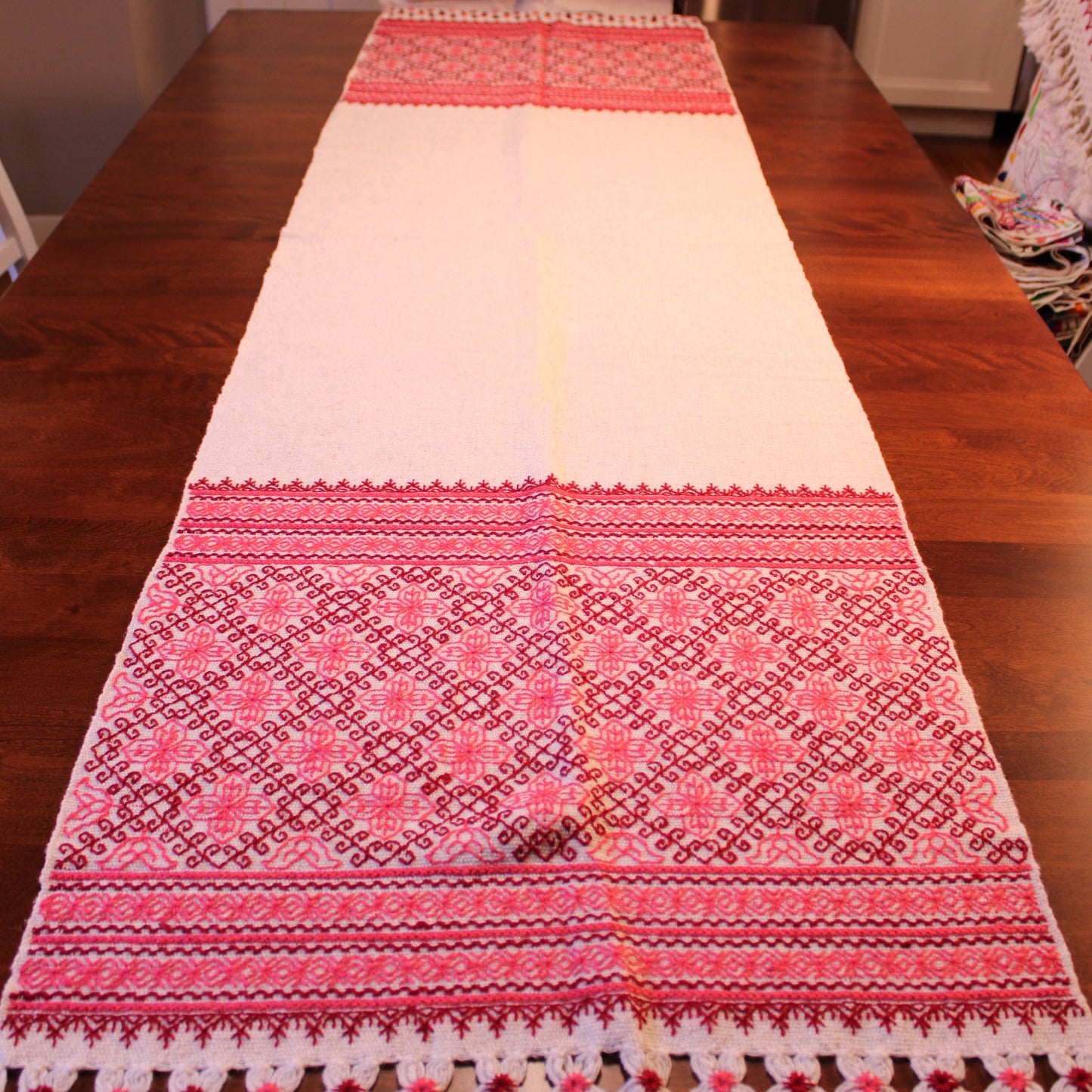
Bed scarf-runner-hand embroidered with wool /Pink
Bed scarf-runner-hand embroidered with wool /Pink
Regular price
$129.74 USD
Regular price
Sale price
$129.74 USD
Quantity
Couldn't load pickup availability
The textiles of Hueyapan, Puebla, known as the "Jewel of the Sierra," are artisanal pieces primarily made from sheep's wool and decorated with ancestral embroidery that reflects the Nahua worldview. Declared an Intangible Cultural Heritage of Puebla, this tradition stands out for its use of natural dyes and techniques like the backstrap loom and pedal loom.
Traditional Garments
Artisans from the region create a wide variety of clothing and accessories:
- Tomicotón: A traditional men's garment made of wool, decorated with "ancient embroidery" or cross-stitch; it often features "Tree of Life" motifs and local fauna.
- Quechquemitl: An ancestral shoulder cape that combines curved weaving on a backstrap loom with embroidery in wool or cotton threads dyed with indigo and cochineal.
- Shawls and Rebozos: Considered the community's specialty—Hueyapan is called the "Birthplace of the Embroidered Shawl". These can exceed two meters and feature intricate geometric, floral, or star designs.
- Other items: Blouses, huipiles, ponchos (gabanes), wrap skirts (enredos), sashes, bags, and home decor like table runners and cushions.
Techniques and Materials
The process is entirely manual and can take from several weeks to months for complex pieces:
- Materials: Artisans primarily use natural wool, though acrylic fiber versions are also made to offer more affordable options.
- Dyes: Natural dyes such as indigo (añil), cochineal, walnut husks, and other regional plants are used to create a unique color palette.
- Embroidery: The "ancient embroidery" (pepenado or outlining) is particularly notable because the designs appear identical on both sides of the fabric (double-sided).
Cultural Value and Collectives
This tradition is passed down through generations, involving women, men, and children in preserving their identity. Collectives like Tamachij Chihuatl, led by master artisan Teresa Lino Bello, have been essential in rescuing and promoting these techniques nationally and internationally.
Share